Can Liposuction Farmington Hills Help You Reach Your Aesthetic Goals?
When someone starts looking into body contouring, the first question is rarely about technique. It is usually more personal than that. Will this actually help me feel more comfortable in my clothes? Will it fix the area I have been fighting for years? Will the result look natural, or obvious?
Those are the right questions to ask.
Liposuction can be a very effective procedure for reshaping stubborn areas of fat, but it is not a catchall solution. It does some things exceptionally well and other things not at all. If you are considering Liposuction Farmington Hills options, the real value is not in finding the fastest appointment or the lowest advertised price. It is in understanding whether the procedure matches your anatomy, your goals, and your expectations.
That distinction matters more than many people realize. Some patients come in thinking they need fat removal when what they actually need is skin tightening, muscle repair, or a broader surgical plan. Others are excellent candidates for liposuction and simply need a realistic explanation of what can be accomplished. The difference between satisfaction and disappointment often starts long before surgery day.
What liposuction is designed to do, and what it is not
Liposuction is a body contouring procedure. Its purpose is to remove localized fat deposits that do not respond well to diet and exercise. It is often used to slim and refine areas such as the abdomen, flanks, thighs, upper arms, back, under the chin, and sometimes the chest.
That sounds straightforward, but the nuance is important. Liposuction does not treat obesity. It does not replace healthy habits. It does not tighten significantly loose skin. It does not reliably improve cellulite, stretch marks, or muscle separation after pregnancy. If someone goes into surgery expecting it to function like a major weight loss intervention, the procedure will feel underwhelming no matter how technically well it is done.
On the other hand, for the right person, liposuction can be transformative in a quiet, practical way. A patient may weigh almost the same afterward but find that jeans fit better, dresses hang more cleanly, and certain bulges no longer dominate the silhouette. Those are aesthetic changes, yes, but they often have a psychological ripple effect. People stand straighter. They stop dressing around one area they dislike. They feel less frustrated by a body region that seemed immune to their efforts.
That is usually where liposuction shines, in refinement rather than reinvention.
The best candidates tend to share a few traits
There is no single perfect liposuction patient, but in practice, the strongest candidates usually have good skin tone, stable weight, and a specific area or two that has not responded to lifestyle changes. Age matters less than tissue quality. A healthy 52 year old with firm skin and focused goals may be a better candidate than a 29 year old with major laxity and diffuse concerns.
A consultation should look beyond the obvious complaint and assess the whole picture. Surgeons pay attention to fat distribution, skin elasticity, muscle tone, scar history, healing tendencies, and whether the patient’s goals match the likely outcome. A person who says, “I like my overall shape, but this lower abdominal fullness never goes away,” is often easier to help than someone who says, “I want to look like a different person.”
That may sound blunt, but it is an important guardrail. Cosmetic surgery tends to work best when it fine tunes rather than chases perfection.
Signs liposuction may be a good fit
- You are close to your usual weight and have maintained it for a while.
- You have stubborn pockets of fat in defined areas.
- Your skin still has decent elasticity.
- You understand that contour improvement matters more than scale changes.
- You are healthy enough for surgery and recovery.
Even within that group, there are trade-offs. Someone may be a good candidate for flank liposuction but not for aggressive abdominal sculpting. Another patient may benefit from neck liposuction but need a skin tightening procedure to get the sharper jawline they want. The point is not just whether liposuction can be done, but whether it can produce the result you actually have in mind.
The areas people most often want treated
In and around Farmington Hills, as in most suburban communities, patients tend to request liposuction for a familiar set of concerns. The lower abdomen and flanks are common because those areas are notoriously resistant to exercise, especially after pregnancy or after years of weight fluctuation. The outer thighs remain a frequent target, particularly for patients who feel their body looks balanced from the front but wider through the hips and upper legs than they would prefer.
Upper arm fullness is another concern that comes up often. Patients usually do not mention it first. They frame it as a wardrobe issue. Sleeves feel tight. Tank tops become less appealing. Photos from the side start to bother them. Liposuction can help here, but arm skin quality has to be assessed carefully. Removing fat from an area with poor elasticity can make loose skin more obvious.
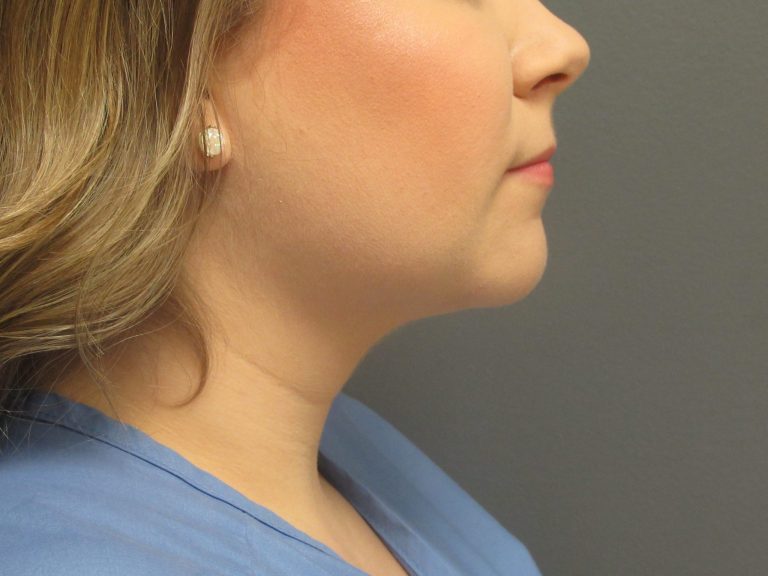
Under the chin is also worth mentioning. Submental fullness can be surprisingly stubborn, even in people who are otherwise lean. When neck structure is favorable and skin tone is good, a relatively small amount of targeted fat removal can create a sharper profile. But if the issue is primarily skin laxity or platysmal banding, liposuction alone may fall short.
This is why a good surgical plan is based on anatomy, not on the trendiest treatment area.
What people in consultation often get wrong
The most common misconception is that more fat removed equals a better result. It sounds logical, but it is often untrue. Overly aggressive liposuction can create contour irregularities, waviness, hollows, and unnatural transitions between treated and untreated areas. Good body contouring is about balance and shape. The surgeon is not just subtracting volume. They are preserving harmony.
Another misunderstanding involves timing. Some patients expect a final look within two or three weeks. In reality, the early recovery period includes swelling, firmness, temporary asymmetry, and unevenness that usually settle gradually. You Liposuction Farmington HIlls may look slimmer in clothes fairly early, but the refined result takes longer. It is common for the contour to continue improving for several months.
Then there is the issue of skin tightening. Marketing language around cosmetic procedures can make people believe every device or every liposuction technique also tightens skin dramatically. Modest tightening is possible in some cases, especially when the skin is already fairly resilient, but liposuction is not a substitute for procedures designed to remove excess skin. A candid consultation should make that plain.
Choosing a surgeon in Farmington Hills is about more than proximity
It is convenient to search for Liposuction Farmington Hills and start with nearby practices, and location does matter. Follow up visits are easier when the office is close. Recovery support is easier to manage. A local reputation can also tell you a lot. But convenience should not be the deciding factor.
Body contouring requires judgment as much as technical skill. You want a surgeon who can evaluate whether liposuction alone makes sense, whether another procedure would serve you better, or whether no surgery is the wisest recommendation right now. A good consultation does not feel like a sales pitch. It feels like a thoughtful assessment.
Pay attention to how the surgeon explains limitations. If every concern you mention gets an enthusiastic yes without any discussion of trade-offs, that is not reassuring. The best consults usually include at least one phrase patients do not expect to hear, something like, “We can improve this, but not perfectly,” or “If we remove too much here, it may look unnatural,” or “Your skin is the limiting factor, not the fat.”
Those are signs of restraint, and restraint is often what produces elegant results.
What surgery day and the first few weeks usually look like
The details depend on the treatment area, the amount of fat being removed, whether other procedures are combined, and the surgeon’s preferred technique. In many cases, liposuction is performed in an accredited surgical facility using local anesthesia with sedation or general anesthesia. Small access incisions are made, fluid is introduced to help with fat removal and bleeding control, and a cannula is used to suction targeted fat.
Patients are often surprised by how small the incisions are and how little those scars matter compared with the contour itself. They are more surprised by the recovery experience. Liposuction is usually not described by patients as unbearable, but it is not trivial either. Soreness often feels like a deep bruise combined with stiffness. Compression garments are typically worn for a period of time. Swelling can fluctuate. Areas may feel numb, firm, or lumpy before they soften.
If you are planning around work and family life, practical expectations help. Many people can return to desk work within several days to a week, depending on the extent of treatment. More physically demanding jobs may require longer. Exercise usually resumes gradually. Social events can be tricky if they are scheduled too soon, not because you will necessarily look obviously postoperative, but because you may still feel tight, swollen, and not quite yourself.
One of the most useful pieces of advice I have heard patients share with each other is simple: judge the result too early and you will almost always be frustrated. The body needs time to settle.
Recovery is where patience pays off
There is a pattern to liposuction recovery that experienced surgeons discuss often because it catches people off guard. Early improvement is visible, then swelling increases and the result can appear less defined for a while, then the contour refines in stages. That ebb and flow is normal.
Hydration, walking, garment compliance, and avoiding premature strenuous activity all help, but none of them override biology. Healing moves at its own pace. Some people swell more than others. Some areas soften quickly while others take longer. Lower abdomen and flanks often require patience. Inner thighs can swell in a way that temporarily makes patients think nothing changed. Neck liposuction may reveal crisp improvement fairly early, but even there, final refinement takes time.
This is one reason photos taken at standardized intervals matter. Day to day mirror checks are a poor way to evaluate progress. Weekly changes are subtle. Monthly changes are more meaningful.
Questions worth asking at your consultation
- What result is realistic for my anatomy, not just my wish list?
- Is liposuction alone enough, or would another procedure improve the outcome?
- How much downtime should I genuinely expect for my job and routine?
- What are the most common reasons patients like me feel disappointed?
- How do you manage irregularities, swelling, and follow up care if healing is slow?
Those questions tend to open up a more useful conversation than simply asking, “How many pounds will I lose?” The answer to that last question is usually less relevant than patients think.
How liposuction compares with non-surgical fat reduction
Non-surgical body contouring treatments appeal to many patients because they seem easier to fit into a busy life. There is no anesthesia, less downtime, and often less anxiety around the process. For a modest fat bulge and a patient who wants gradual change, those options can be reasonable.
Still, liposuction remains the more definitive approach for many concerns. It allows precise removal, more visible reshaping, and immediate direct treatment of the targeted area. That does not make it the right choice for everyone, but it does explain why some patients spend money on multiple rounds of non-surgical treatment, see only mild improvement, and eventually decide they would rather have one surgical intervention with a clearer endpoint.
The best choice depends on the degree of correction desired, tolerance for downtime, budget, and anatomy. A patient with a very small submental fullness may be happy with a less invasive option. Someone bothered by pronounced flank fullness is often better served by liposuction if they are healthy and comfortable with surgery. The important thing is to compare likely outcomes honestly, not just compare how easy the marketing sounds.
Aesthetic goals are rarely just about size
People often frame cosmetic concerns in terms of looking smaller, but the underlying goal is usually proportion. They want the waist to read more clearly against the hips. They want the upper arm to look more toned in profile. They want a cleaner line under fitted clothing. They want their reflection to align more closely with how they experience themselves.
That is why liposuction can be satisfying even when the number on the scale barely changes. Fat has volume. Remove a focused pocket from the right place, and shape shifts. A dress that used to catch at the waist falls smoothly. A blazer buttons without that bunching at the flanks. A patient who always posed at a certain angle stops thinking about angles at all.
These are not dramatic movie scene transformations. They are everyday, lived improvements, and those tend to be the most durable in terms of satisfaction.
When liposuction alone may not be enough
A careful surgeon should be direct about the situations where liposuction by itself can disappoint. Postpartum abdominal concerns are a common example. If the issue includes stretched skin and separated abdominal muscles, suctioning fat may help only partially. The patient may still be left with laxity or a contour that does not look significantly flatter. In those cases, an abdominoplasty may address the concern more effectively, either alone or in combination with liposuction.
Major weight loss patients are another group that needs nuance. They have often done something genuinely hard and life changing, but excess skin can become the dominant issue. Removing more fat is not always the answer. It can even worsen draping. Procedures that remove skin and reposition tissue may be more appropriate.
Cellulite deserves mention too, because patients ask about it constantly. Liposuction is not a dependable cellulite treatment. Sometimes the surface can look a little smoother if overall volume improves the contour, but in other cases, underlying dimpling becomes more visible. This is exactly the kind of trade-off that should be discussed upfront.
The emotional side of deciding
Cosmetic surgery decisions live at the intersection of practicality and emotion. It is normal to feel excited, skeptical, embarrassed, hopeful, and cautious all at once. People worry about seeming vain. Then they live for years with a body concern that quietly takes up too much mental space. By the time they book a consultation, they are usually not chasing an impulse. They are trying to decide whether a persistent frustration has a reasonable solution.
That perspective matters. The healthiest motivation is usually not “I need this to feel worthy.” It is closer to “I have a specific concern, I understand the limits, and I think improving it would make me feel more at ease.” That mindset tends to pair well with good outcomes because it is grounded.
If you are exploring Liposuction Farmington Hills providers, give yourself permission to be thorough. Ask detailed questions. Request clarification. Look at before and after photos critically, especially on patients with body types similar to your own. Notice whether the practice communicates clearly about recovery, risks, and limitations. Aesthetic medicine is full of glossy promises, but confidence usually comes from plainspoken information.
So, can it help you reach your goals?
For the right patient, yes. Liposuction can be one of the most effective tools available for improving contour in stubborn areas that do not respond to lifestyle changes. It can sharpen proportion, improve clothing fit, and Liposuction Farmington HIlls reduce a very specific kind of frustration that diet and exercise do not always solve.
But the key word is right. Right goal, right anatomy, right timing, right surgeon, right expectations.
If your goal is targeted contour improvement and you have realistic expectations about healing and results, liposuction may be exactly the procedure that moves you closer to how you want to look. If your concern is really loose skin, major weight loss, or structural abdominal change, a different approach may serve you better. Knowing the difference is where a strong consultation earns its value.
A well chosen cosmetic procedure does not need to change everything. Sometimes it only needs to solve the one problem that has been bothering you for years. For many patients, that is more than enough.
Aesthetic Plastic Surgery & Laser Center, Michelle Hardaway M.D.
27920 Orchard Lake Rd
Farmington Hills, MI 48334
(248) 221-1957
FAQ About Liposuction Farmington Hills
What disqualifies you from getting liposuction in Farmington Hills?
A surgeon may recommend postponing or avoiding liposuction if a health condition, medication, or nicotine use raises the risk of surgery or poor healing. A consultation is needed to assess your medical history and whether the procedure fits your goals.
Can liposuction remove 20 pounds?
Liposuction is a body contouring procedure for localized fat. It is not a weight loss treatment, and a specific number of pounds is not a safe or useful target. The surgeon determines how much can be removed safely for each patient.
What are the risks of liposuction?
Risks include infection, changes in sensation, uneven contours, and complications from anesthesia or blood clots. A plastic surgeon can explain which risks apply to you and what to expect during recovery.